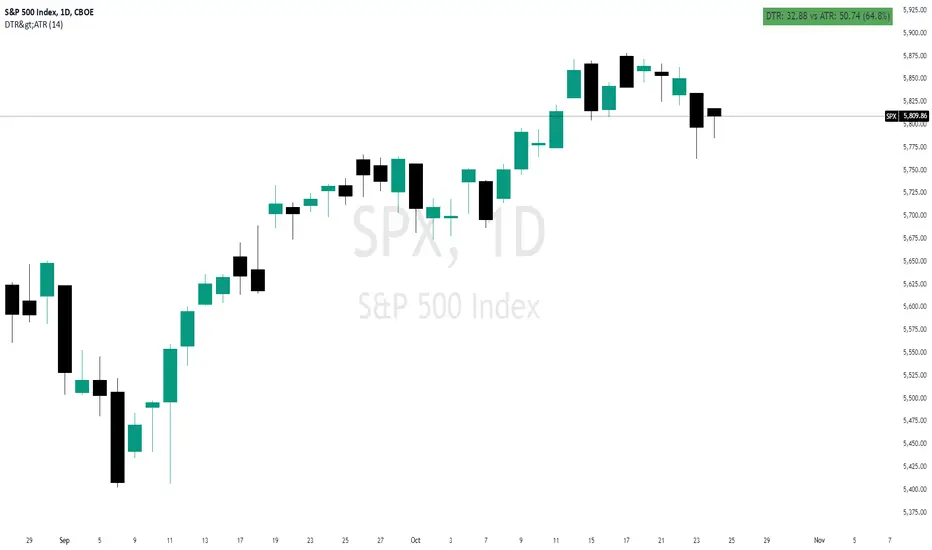
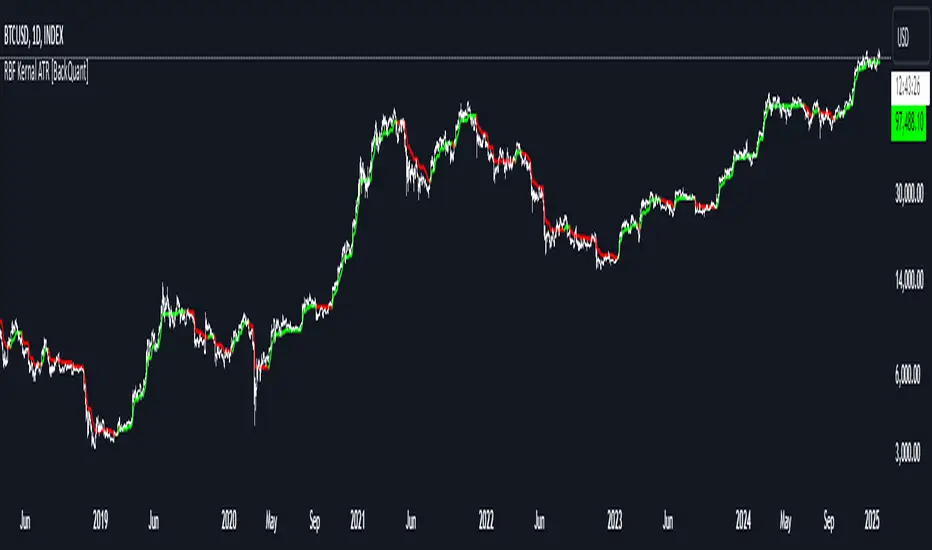
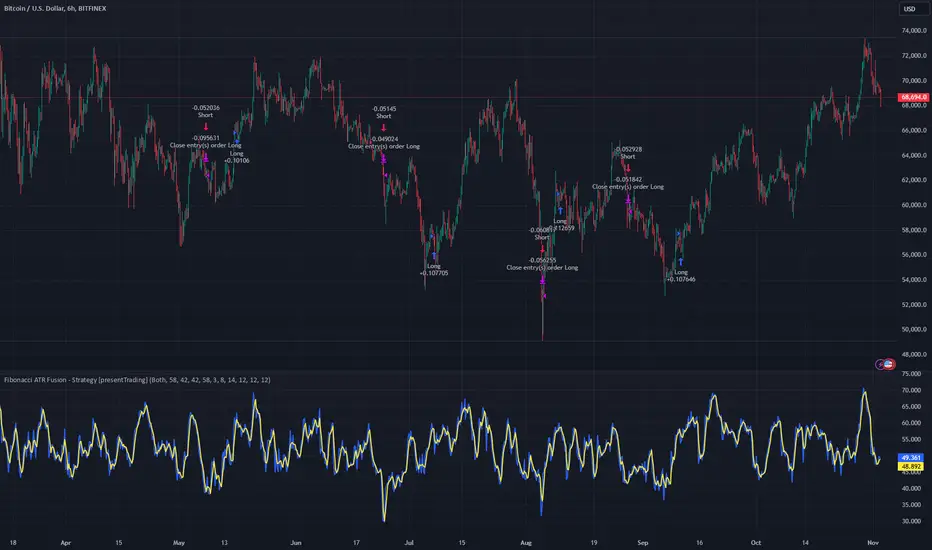
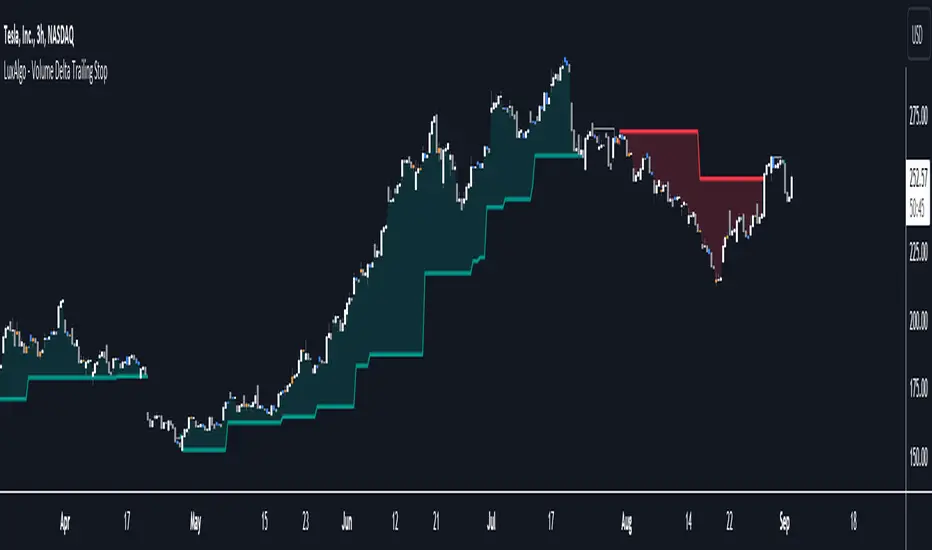
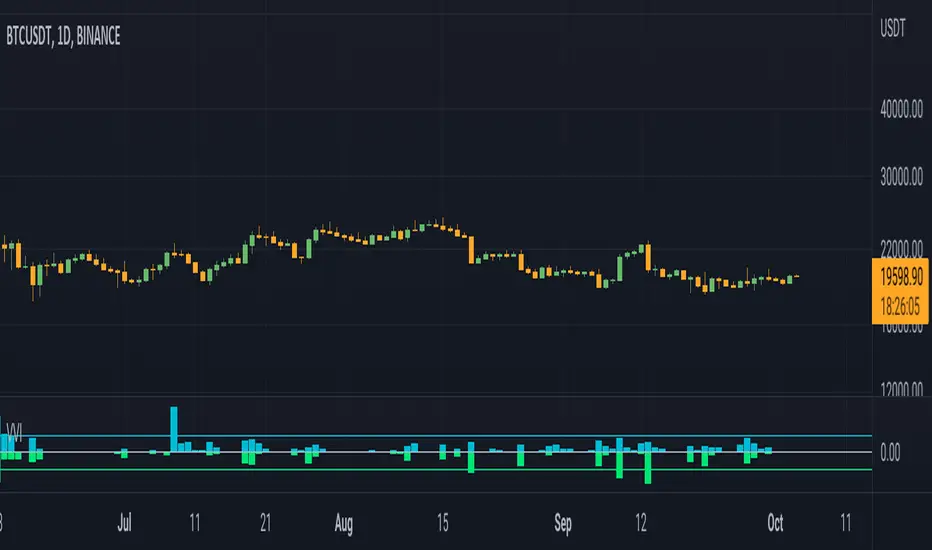
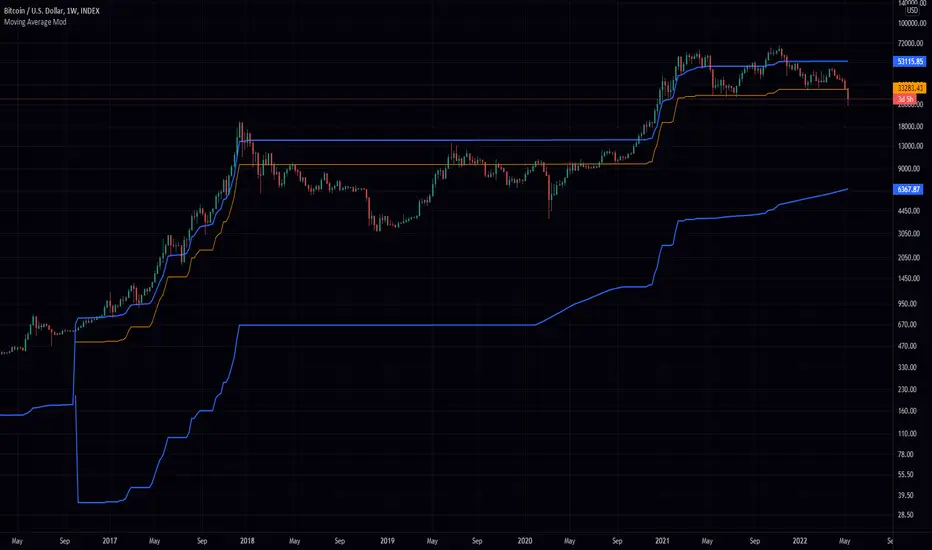
Strategic Trend FilterStrategic Trend Filter (STF) | MisinkoMaster
Strategic Trend Filter is a structurally weighted trend confirmation overlay designed to identify high-quality directional environments while filtering out low-volatility noise and weak structural movement.
Rather than relying on traditional moving averages, STF constructs a dynamically weighted equilibrium level derived from multiple price components and structural factors. It then validates trend conditions only when price displacement is supported by sufficient volatility expansion.
The result is a disciplined trend filter that emphasizes structural strength over simple price crossing behavior.
Core Philosophy
Many trend tools respond primarily to price direction. STF goes further by incorporating:
• Structural correlation behavior
• Statistical dispersion
• Rate-of-change magnitude
• Price range positioning
• Volatility confirmation
This multi-factor structure allows the filter to respond only when price movement demonstrates internal coherence and sufficient expansion.
In short, STF is designed to confirm quality trends, not just directional movement.
Key Features
Multi-factor structural weighting model
Dynamic equilibrium filter instead of traditional moving average
Volatility-confirmed trend validation
Volume-aware filter stabilization
Median-based volatility confirmation
Automatic trend coloring
Optional on-chart long and short labels
Overlay design for direct price interaction
Reduced whipsaws in low-volatility environments
Suitable as a directional bias filter for strategies
How It Works (Conceptual)
The indicator builds a composite equilibrium level using several internal components:
Structural Correlation
Measures how individual price components relate to the composite price structure over the lookback window.
Statistical Dispersion
Standard deviation measurements help evaluate how far price is distributing around equilibrium.
Momentum Magnitude
Absolute rate-of-change calculations measure directional displacement strength.
These components are combined into weighted factors that influence how much each price dimension contributes to the final filter value.
The resulting filter represents a dynamic structural equilibrium rather than a simple average.
Additionally, a volatility confirmation layer compares current true range behavior against its median condition. Trend state changes are validated only when sufficient volatility is present.
Proprietary weighting relationships remain protected in the invite-only implementation.
Trend Logic Explained
Bullish State
Activated when price structure holds above the dynamic filter and volatility confirms expansion. This suggests sustained upward pressure supported by structural alignment.
Bearish State
Activated when price structure remains below the filter and volatility confirms expansion. This indicates organized downside movement rather than random fluctuation.
If volatility contracts or price fails to maintain structural positioning, the filter avoids unnecessary state changes.
Volume Stabilization Mechanism
When volume declines relative to the previous bar, the filter stabilizes temporarily. This reduces sensitivity during participation drops, helping avoid false transitions caused by thin liquidity conditions.
This feature improves robustness in lower-liquidity assets and during session transitions.
Visual Components
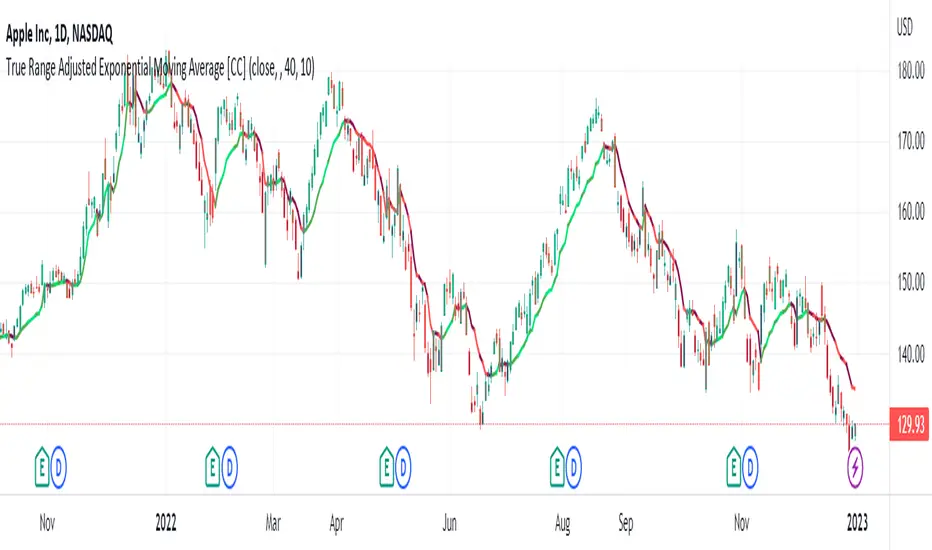
Dynamic Filter Line
Represents structural equilibrium and adjusts continuously to price behavior.
Color-Coded Environment
Filter and candles change color to reflect bullish or bearish state.
Shaded Region
A filled zone between price and filter visually highlights directional dominance.
Optional Long / Short Labels
When enabled, transition points are clearly marked on the chart.
Inputs Overview
Lookback Period
Controls the primary structural evaluation window. Higher values create smoother, more stable filters. Lower values increase responsiveness.
Confirmation Length
Defines the volatility median window used for expansion validation.
Allow Labels?
Enables or disables on-chart long and short markers.
Parameter Tuning Guidance
Shorter Lookback
→ Faster adaptation
→ More sensitive to structural shifts
→ Suitable for lower timeframes
Longer Lookback
→ More stable equilibrium
→ Better for swing or position trading
Shorter Confirmation Length
→ Faster volatility confirmation
→ More reactive signals
Longer Confirmation Length
→ Stricter volatility validation
→ Fewer but stronger transitions
Best Use Cases
Directional bias filter for breakout systems
Confirmation layer for momentum strategies
Trend qualification before position scaling
Volatility-aware trade filtering
Multi-timeframe bias alignment
Portfolio-level environment scanning
Strategy Integration Ideas
Use STF to:
• Trade only in the direction of confirmed trend state
• Avoid mean-reversion setups during strong structural expansion
• Filter out low-volatility consolidation phases
• Improve win rate by aligning entries with structural bias
STF performs best when paired with entry triggers such as pullbacks, continuation patterns, or momentum expansions.
Summary
Strategic Trend Filter is a structurally weighted, volatility-confirmed overlay designed to detect organized directional movement while filtering weak or noisy price action.
By combining correlation structure, dispersion metrics, momentum magnitude, and volatility validation, STF delivers a disciplined trend confirmation framework suitable for discretionary traders and systematic strategy developers alike.
Pine Script® 인디케이터